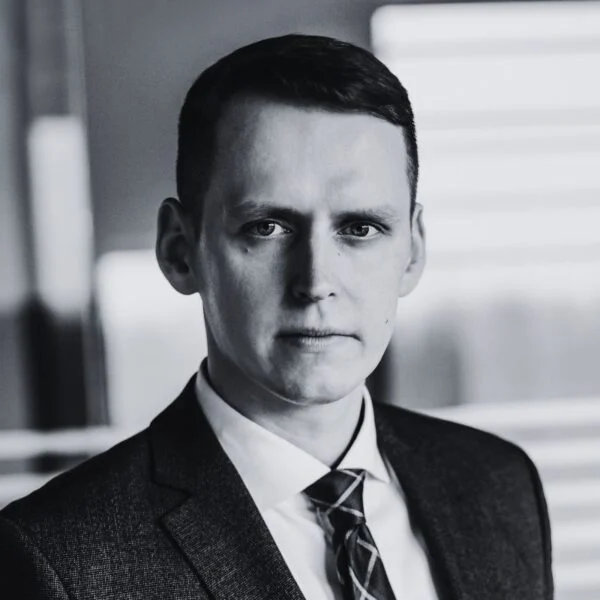
‘These are personal tragedies. Someone devotes years of their life, works incredibly hard, and then loses control over the company’s future. People do not usually talk openly about such things,’ says Michał Górecki, a Polish attorney-at-law specialising in start-ups. He explains what to watch for when signing an agreement with a VC fund, business angel or counterparty to avoid trouble.
Wojciech Matusiak: Do start-up founders sometimes enter into unfavourable agreements with VC funds or business angels?
Michał Górecki: Yes. They often do not negotiate, or use lawyers without experience in this field. It is then easy to overlook issues that seem minor but prove crucial in the longer term. Start-up founders generally have far less knowledge, expertise and experience than, for example, the people representing a venture capital fund.
WM: Which issues deserve particular attention?
MG: The most common problem is that contractual provisions are not understood. Something may seem unimportant when the documents are signed, but the problem emerges later and hits the founders financially.
A VC fund may, for example, stipulate a predetermined return on its investment when the start-up’s shares are sold.
These may be liquidation preferences entitling the fund to, say, three times its investment before founders and other shareholders receive anything from the balance. Such preferences are very dangerous. Unless a strategic buyer offers an exceptionally high price, even a minority VC investor may take everything, leaving little for founders or employee option holders.
WM: What other traps can agreements contain?
MG: Clauses allowing control of the start-up to be taken over if predetermined commitments, such as the development strategy, are not fulfilled.
A VC fund sees things differently from the founders. It may benefit from merging two projects in which it has invested, or moving people to another start-up it believes has better prospects. The founders, meanwhile, want to develop their own business idea.
WM: Conflict follows.
MG: Much depends, of course, on whether the fund is professional and ethical. Still, there are cases where a founder ceases to lead the start-up in less than 18 months, replaced by the fund’s own appointee. The risk is particularly acute in fast-growing start-ups, where circumstances change quickly and the lead founder is more likely to lose the chief executive position. There are also many less dramatic details that seem unimportant but later matter greatly. Founders on their second or third project understand this and are much more aware of the need for professional help in negotiating agreements.
WM: Does this happen in Poland?
MG: In Poland, these stories rarely make the headlines. The start-up market is still small, and people do not usually publicise such experiences. They are personal tragedies: someone devotes years of their life, works incredibly hard, then loses control of the company’s future. They must watch a new owner develop their ‘baby’, sometimes making unwise decisions.
There is no shortage of examples abroad. Cisco Systems, now one of the world’s largest IT companies, began in the first half of the 1980s as a start-up with then-groundbreaking universal network router technology. Founded by married couple Leonard Bosack and Sandra Lerner, it initially operated from their kitchen. By 1987, it was growing and urgently needed funding, which Sequoia Capital provided the following year. By 1990, both founders were gone: Sandra was dismissed and Leonard left in protest. They immediately sold their majority holding for USD 170 million. That is a lot, but the company’s current market capitalisation is about USD 200 billion. One might say the company itself ultimately benefited, but outcomes vary.
WM: Applications have just opened for ‘Legal Support for Start-ups’. Your firm is among those providing advice funded by the Polish Agency for Enterprise Development (PARP). What assistance is available?
MG: First, preparing a company legally for due diligence and negotiating an investment agreement. Founders can go into negotiations with a fund supported by their own lawyer, vetted through PARP’s selection process. That guarantees relevant knowledge and experience.
Secondly, a lawyer can review, draft and negotiate the start-up’s own standard contract with counterparties. This means professional preparation for selling products or services or entering cooperation agreements with large companies, which are increasingly interested in working with start-ups.
Thirdly, a qualifying start-up will receive five hours of general legal consultations to discuss any day-to-day issues.
WM: What mistakes do founders make when contracting with counterparties or corporations?
MG: For example, they fail to allow for changes in product or service prices following unforeseen events, such as higher project costs caused by component prices or staffing costs.
Contracts may also contain penalties or predatory clauses that place the start-up at a serious disadvantage, effectively bringing it under the other party’s complete control. Corporations often excel at this.
There is a whole range of problems at different levels and in the overall structure of the agreement. Imprecise Polish legislation does not help.
Inexperienced founders may simply not know the consequences of what they sign. This is not always about bad intentions on the other side. Nor is it a criticism of founders: this is not their area of expertise. That is what legal advisers are for.
WM: How can a start-up apply to PARP’s ‘Legal Support for Start-ups’ programme?
MG: Applications are submitted electronically only. There is no excessive bureaucracy, and we help prepare them. The major constraint is the funding pool: PLN 500,000. It is first come, first served.
Interview published on 6 August 2018 on the Generacja Smart website
https://generacjasmart.pl/2018/08/06/michal-gorecki-wywiad/