It is now much harder to find someone motivated enough to leave a comfortable corporate life for the very hard work of building their own company.
MG: Let us talk about Pitching Fight Club. Have you discovered any hidden gems?
BJ: No, discovering gems is not the purpose at all. It is more of an outreach project, one of many initiatives aimed at building the community.
MO: You organise many events like this. Is their main purpose to help young people find their way in the startup community?
BJ: Today, many institutions and funds have specialised and want to work with mature projects because they are commercially viable. Few operate commercially at the 'entry level', the beginner stage, where people arrive with ideas and we have to keep repeating the same mantra: 'You have not defined your customer group precisely enough. You have no market strategy. A project like this needs a solid spreadsheet showing when it will break even. Do not be dazzled by startup tricks and pitching, because ultimately the numbers in Excel must add up…' In that sense, Kraków Technology Park is returning to early-stage education. Excellent work is being done by Reaktor in Warsaw, where people simply arrive with an idea. Our acceleration programme in Kraków is firmly aimed at more advanced startups that have at least a product, are selling something, or at least have some track record of operating. For beginners, I strongly recommend Startup Weekends, held throughout Poland and this autumn in Kraków too. Recently, at the closing gala of Kraków Startup Week, I ended a presentation with a slide showing that between 2004 and 2016 the number of school-leavers taking the matura exam in Małopolska more than halved. The lake we fish in is therefore less than half the size. You do not notice it in Kraków because students come from elsewhere and, I think, the proportion going to university after secondary school is still increasing. Even so, the number of young people has fallen dramatically between the early-1980s baby boom and the cohorts about to enter the labour market. It is now much harder to find someone motivated enough to leave a comfortable corporate life for the very hard work of building their own company. Finally, the market is crowded, so competing globally really is difficult. I think the stories of early-1990s millionaires — selling discs outside a stadium to build CD Projekt, or trading butter to build Maspex in Wadowice, now exceptionally strong companies, or the two brothers assembling garage doors in Nowy Sącz who now have the enormous Wiśniowski business — will not easily repeat themselves. They reflected that particular market.
You need to keep your feet on the ground. That is why we talk about fintech, identifying trends, blockchain and VR: these are areas where we are at the same stage as the rest of the world, so there is still a chance to compete.
MG: Back then, everything was in short supply, including quality…
BJ: Development was so rapid that the market absorbed a great deal. Today, different ideas are needed. The period when huge amounts of money went into Polish startups — anyone doing something online — is over. In hindsight, it is easy to criticise the 'infamous 8.1 programmes', the Innovative Economy Operational Programme 8.1 EU grants aimed at startups in the previous funding period. But building an intelligent startup support system resistant to fraudsters and opportunists is difficult. Poland's administration could not do it then: it had no experience on that scale and lost to dishonest people. Although we like to see this as an administrative failure, I think it was more a market failure. Today, more funds understand that a simple clone of a US app cannot build a competitive brand. That succeeds once in a million cases. Twitter had no revenue when it went public [editor’s note: Twitter reported revenue of USD 316.9 million in 2012, before its 2013 IPO]: taking inspiration from such outliers, exceptional companies, is not a sensible strategy for entrepreneurs. Keep your feet on the ground. That is why we discuss fintech, trends, blockchain and VR, areas where we are at the same stage as the world and still have a chance to compete. Crowded fields, such as marketing and sales technology, are already very difficult. Poland has excellent examples, of course, but we cannot call them giants. They are successful startups still aspiring to the top tier, with a long way to go. We have GetResponse, Base from Kraków, a kind of CRM for salespeople. But the market is crowded, and what we see as huge successes — Base, for example, with USD 53 million in investment and probably over 200 employees globally — are still 'companies with ambitions'. One of the better products, but it must fight hard for every tenth of a percentage point of market share. Brand24 looks excellent online: from a PR perspective and in Poland it is a great example, but globally it still has a huge amount of work ahead. I am not complaining, just looking honestly at where we are.
MG: Fortunately, those products do not face the same powerful global-dominance effect as social networks or online marketplaces, where the winner usually takes almost everything…
BJ: I think more and more industries work that way. One leader takes most of the market. The scraps are still attractive to many small companies, of course, but the gulf is enormous. Capital accumulation and resource concentration can be seen across many industries.
We are very keen to work with hardware, even more so than with software, but its business role must be properly understood. It should combine software and hardware. Hardware is usually the hook that attracts a customer to whom you are really selling something else, rather like a cinema that actually earns its money from popcorn.
MG: Let us discuss hardware. It is interesting because I recently came across an article by Greg Reichow, formerly vice-president of production at Tesla. He wrote that Tesla has a 'secret second floor' where, besides key components such as motors and batteries, it makes countless small, seemingly trivial parts, achieving business integration approaching that of the old Ford factory. Rather than outsourcing to China, it even makes simple electrical circuits and wires itself. How does that fit your approach to startups?
BJ: We were discussing outliers. I wonder whether this is precisely one of them. With Tesla or SpaceX, both companies do everything in-house instead of using subcontractors. I think SpaceX manufactures 85% of its parts itself. I do not think that is the path for Polish startups, certainly not today, not now, not with this level of funding.
MG: What if a startup came to you with an idea for something physical? Is your programme mainly for purely online, intangible businesses, in line with Paul Graham's ideas?
BJ: We are very keen to work with hardware, even more so than with software, but its business role must be properly understood. It should combine software and hardware. Hardware is usually the hook attracting a customer to whom you are really selling something else, rather like a cinema that earns its money from popcorn. Many projects in our incubator are effectively SaaS, subscription businesses. Their hardware is free or supplied at cost. A good Kraków example is Elmodis, recognised by Intel. Beacon companies — Kontakt.io and Estimote — do not make their money from a circuit board in a plastic or rubber case; they build an entire software environment. In my view, that is where the long-term profit opportunities will lie.
MO: Are startups aware that this model works? Have they thought it through when they come to you?
BJ: Knowledge is globally accessible today. You can easily join Y Combinator's Startup Academy (http://www.ycombinator.com) and learn everything. The only question is whether someone is willing to do their homework. If they come to us without that information, they have not devoted enough time to their own development and to understanding the field they are entering.
Teams often need to generate some traction. The greater a fund's appetite for risk, the earlier it will be willing to come on board, but Poland has few, if any, funds taking such extreme risks. Even seed funds generally wait for technological and market validation.
MO: So, when seeking finance, you need some knowledge, ideally an established team and a good idea. From your perspective, what if someone comes in 'off the street', with no recommendation? Do you invest in such projects?
BJ: Generally, few startups come 'from nowhere'. I always try to obtain opinions and observe the product. Academic projects are different: their founders rarely operate in the investment world, so expecting a referral is difficult, but that certainly does not rule them out. There is another aspect: the 'pipeline' problem, meaning the divided attention of investors. Poland's investment teams are very small, and funds operate on a narrow 'margin'. Teams must remain small, so they cannot devote time to hundreds of projects simultaneously. Once a startup gets through the initial selection, it joins a watch list. From there, we select companies with a surprising product offering, very thoroughly prepared documentation and presentations, or a team with exceptional potential. We devise validation tests. Teams often need to generate some traction. Teams often need to generate some traction. The greater a fund's appetite for risk, the earlier it will come on board, but Poland has few, if any, funds taking such extreme risks. Even seed funds generally wait for technological and market validation.
MO: Can you estimate what percentage of applications you are willing to spend time examining more closely?
BJ: That is very difficult; much depends on the impression they create. In the first round of our accelerator, 40–50% of projects were eliminated at an early stage; now it is only 30%. Ultimately, we reject nine out of ten projects. Applicants have come to understand our expectations much better. Some funds are very active, attending conferences, including beginner events, and spreading the word. They consequently receive many proposals from there. Others remain somewhat hidden and are very difficult to reach from outside. Simply omit an application form from the website or make contact details a little harder to obtain. It all depends on strategy: whether you want a very broad funnel at the outset.
Funds are not divided into good and bad, but by specialism: what they are good at.
MG: How does cooperation within the industry work? Do you share information, try to invest together and warn one another about weak projects?
BJ: I would rather not say too much about things I am still exploring. Sometimes several funds compete for a project, but generally we cooperate. We currently co-invest with six Polish funds: we were first on board and other investors joined gradually. I think funds increasingly understand that co-investment lets them share risk and costs. We have closer ties with some and no relationship with others. To answer your question, our activities are generally cooperative.
MG: Excellent people with really good ideas come to your accelerator, but inevitably you can help only up to a point. Who would you pass them on to? What would you suggest? Which venture fund in Poland or abroad would you recommend?
BJ: Funds are not divided into good and bad, but by specialism: what they are good at. SpeedUp Venture focuses its time and attention on fintech. Remember that a fund also has work to do building contacts, understanding the market and identifying what might follow an investment. Networks always take time to build. SpeedUp has devoted substantial resources specifically to fintech. Innovation Nest focuses more on SaaS and B2B. There is also Black Pearls, which has long talked about space technologies. I recommend examining funds' histories: what happened to their projects, whether there were follow-on rounds, and whether the fund could reach agreement with its partners. For example, the managers of Innoventure, formerly managers of our fund, have that experience. It is very encouraging to see so many funds making follow-on investments in our companies, and their prudent business approach and understanding of their place along the investment path. I do not think this is a flash of genius; it is simply doing your homework. Funds do not operate on a 'hit and run' basis: invest and either make money or not. You invest, and before you make money, many things happen along the way. Long-term thinking really pays off for investors. Just look at Innoventure's current portfolio. I think it is excellent and a very interesting proposition for hard-tech and deep-tech projects.
There is more to come. Our conversation continues in the next post. Stay tuned!
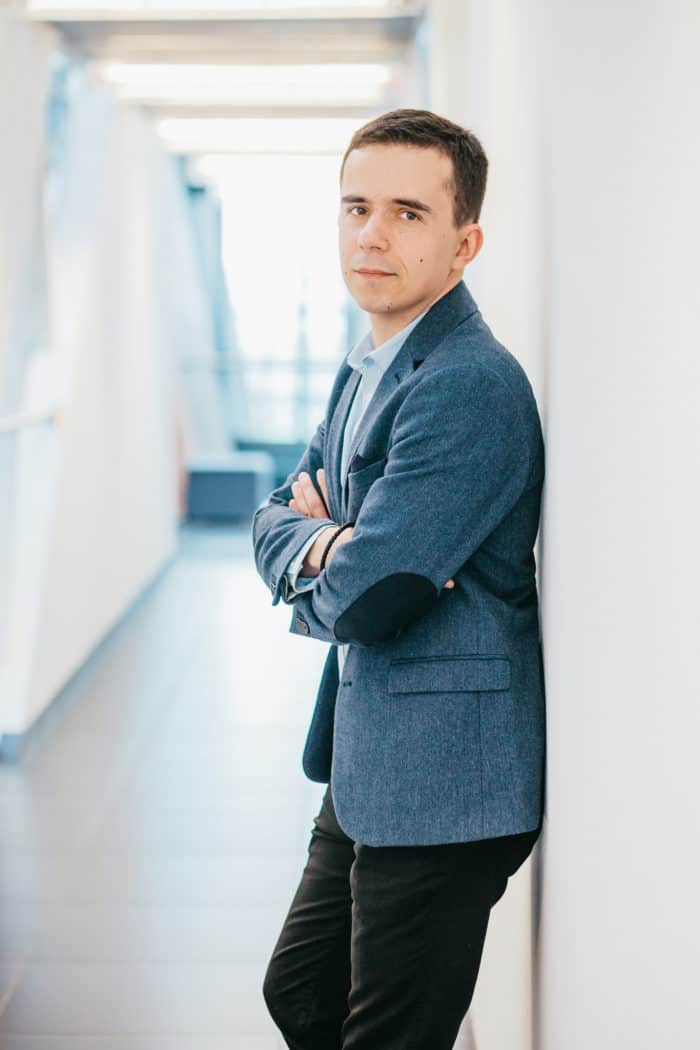
Bartosz Józefowski
Management board member of the KPT Seed Fund. From 2013 to 2017, he was responsible for the technology incubator and all startup activities at Kraków Technology Park. He now leads the KPT ScaleUp acceleration programme. He is deeply involved in Kraków's startup community and nationally as a Startup Poland ambassador. Fascinated by behavioural economics and new technologies, and a Beatles fan.