
Research and development tax relief (R&D relief) provides real support for businesses investing in their products or services. Although its name may evoke white coats and test tubes, R&D relief is not reserved solely for laboratory scientists. Anyone carrying out research and development may benefit. The mechanism is very simple. The hardest part, however, is the first step: classifying the activity as research and development.
R&D relief: why it is worthwhile
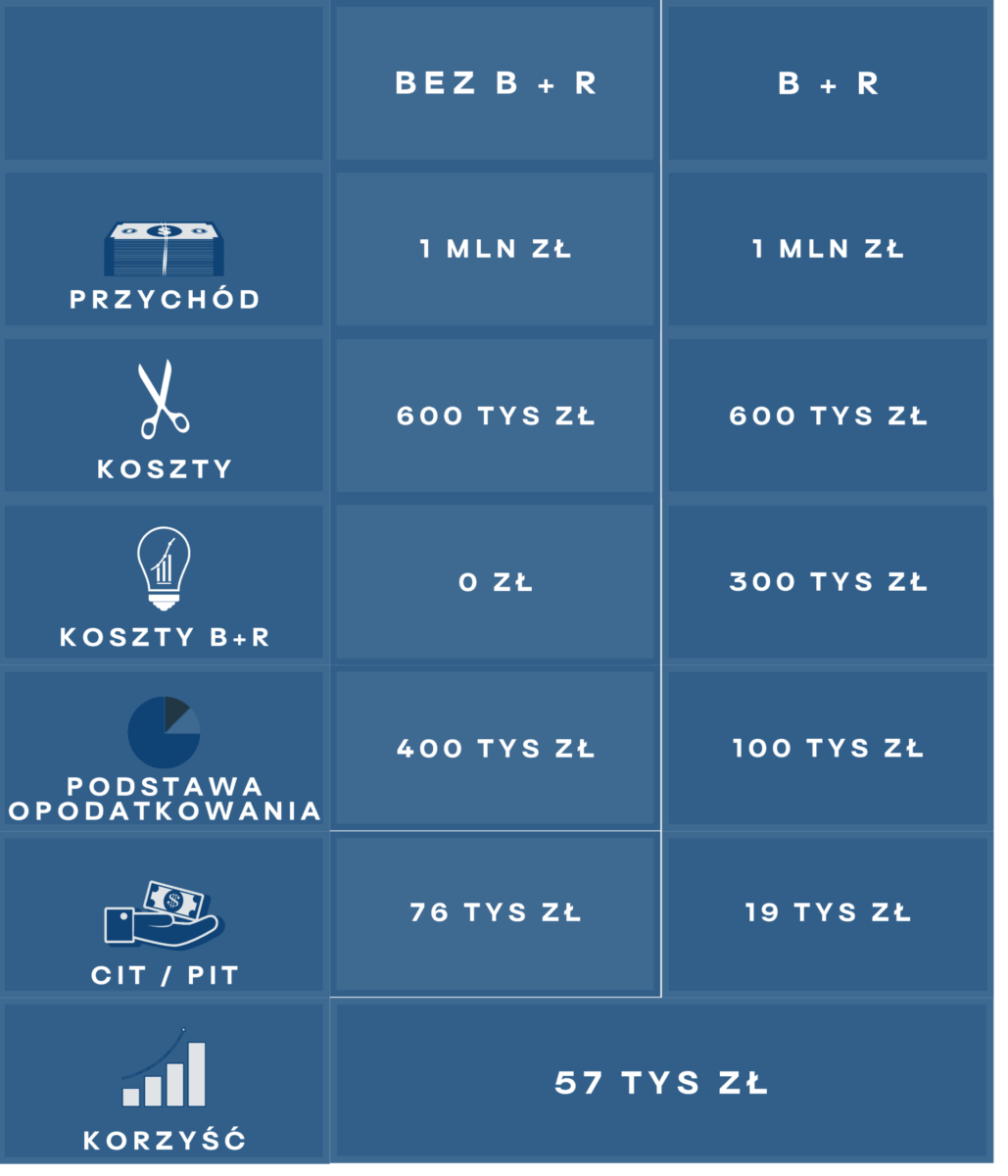
R&D relief allows expenditure on research and development to be deducted from the tax base. In effect, the state covers nearly 20% of eligible R&D expenditure. Moreover, start-ups need not report a profit to benefit. If they report a loss, the tax office pays them in cash the amount by which their tax would have been reduced.
Research and development activities
R&D relief is intended for entities whose activities meet all the following conditions:
- they are creative;
- they involve scientific research or development work;
- they are undertaken systematically;
- they aim to increase the stock of knowledge and use it to create new applications.
Classifying an activity as R&D can be difficult. Expanding on these conditions can help.
Creative activity
Creative activity is directed towards producing new and original solutions, often with unique features. In other words, it cannot be merely imitative activity copying solutions devised by others.
Scientific research or development work
R&D involves scientific research or development work. Development work uses existing knowledge to introduce new solutions. Scientific research seeks to acquire new knowledge, often for commercial use.
Development work
Development work means activities involving the acquisition, combination, shaping and use of currently available knowledge and skills, including those concerning IT tools or software, to plan production and design and create modified, improved or new products, processes or services. It excludes routine and periodic changes to them, even where such changes constitute improvements.
Scientific research
Under the tax Act, scientific research means basic or applied research within the meaning of higher education legislation. For commercial entities, this will usually be applied research.
- Applied research
This is work aimed at acquiring new knowledge and skills with a view to developing new products, processes or services or significantly improving existing ones.
- Basic research
This means empirical or theoretical work primarily intended to acquire new knowledge of the foundations of phenomena and observable facts, without targeting direct commercial application. R&D relief for this type of research is available only where cooperation is established with an entity specified in the Act, such as a research institute or university.
Systematic activity
R&D consists of activities undertaken systematically. Individual tax rulings indicate that this rule excludes incidental activities from R&D relief. Sporadic activities, such as implementing a new IT system, may fall into that category even if the process takes a long time. The authorities also regard activity as systematic where it follows a previously adopted plan and is conducted regularly and methodically.
The purpose of R&D
R&D is carried out to increase the stock of knowledge and use it to create new applications. The legislature’s use of the phrase ‘with the aim of’ indicates that the activities need not succeed. Research activities are not required to deliver specific results.
R&D relief is not limited to in-house use
The knowledge acquired need not be used by the entity claiming R&D relief. R&D may be carried out for a client seeking products with particular functionality or by other entities within a corporate group. No legal rule prohibits sharing the results of R&D activities.
R&D relief: limits
Sources of revenue
A business earning revenue solely from capital gains cannot claim R&D relief. If it earns revenue both from capital gains and from other sources, revenue from those other sources limits the deduction from income available under R&D relief.
De minimis aid
This condition concerns start-ups using the relief in the form of a tax-office payment in respect of eligible costs. In this form, R&D relief is treated as de minimis aid subject to EU limits. As a rule, the limit is the equivalent of EUR 200,000 over a rolling three-year period.
Read more articles on R&D relief
If R&D relief interests you, we encourage you to follow the next articles on our blog. They will explain in detail which research and development costs can be deducted from income and how to claim the relief safely.