
Launching our Venture Adventure and our series of conversations with PE/VC experts, we arranged to meet Bartosz Józefowski, Head of Kraków Technology Park’s ScaleUP Acceleration Programme. Late autumn in Kraków is an invitation to step away from the desk. We travelled to one of the city’s largest technical support centres for small and medium-sized businesses. We sat down in the KPT building and talked. What did we learn? Read the conversation to find out.
If someone wants to start working 'in startups', it is extremely simple. Start following job vacancies or our events and you can quickly find something suitable. But to start a business, you really need to read widely and meet many people to prepare properly. (…) Investing is another game again: then you need to consider people's credibility and trends.
MO: You have been in the industry for several years. How did you enter the startup community?
BJ: My startup journey began in 2013, when an opportunity arose to work with them professionally. It is a fascinating world you can observe online. But contrary to what the startup community likes to think about itself, it is not all that open. Getting in was not easy; I initially encountered many barriers.
MG: Was there someone who introduced you to those circles?
BJ: I do not think I had a guide to the startup world. I do not believe there is a shortcut. First, you need to learn the jargon. You must attend industry events: initially, showing up matters a great deal; later, once you have a network, somewhat less. In my view, you simply have to do the work: find out who does what and then offer help. There is no shortcut in that sense. You cannot say that merely accompanying or following someone is enough.
MG: So you recommend joining enthusiasts committed to an idea, rather than being driven from the outset by business motives?
BJ: For example, Kraków has a foundation supporting startups called #OMGKRK, which connects different communities. Its ambition is to promote the startup idea and 'open doors'.
MG: Interesting that there is a gap which institutions should theoretically fill…
BJ: If someone wants to start working 'in a startup', it is very simple. Follow job vacancies or our events and you can quickly find something suitable. But to start a business, you really need to read widely and meet many people to prepare properly. All the outreach undertaken by, among others, Kraków Technology Park and various foundations aims to encourage people to consider the career path we promote. The labour market is comfortable enough today that promoting startups is essential. Poland needs more entrepreneurial people. Unfortunately, no school really prepares people to run a business, especially a more aggressive, ambitious one. Investing is another story again: then the focus must be on people's credibility and the durability of trends.
Grabbing every opportunity that comes a startup's way severely limits its founders, and we warned our participants against it.
MG: In an interview I read, you once said that current problems involve weak relationships between people and insufficient networking…
BJ: Yes, but networking is not just about having friends. Focus instead on meeting people outside your own circle. People with exceptional technical skills often undervalue, or simply do not know, people with humanities skills who are excellent at understanding others' needs and describing, categorising and organising this very non-digital world. We lack people with business and sales skills, even experience in straightforward trading. Too little is done to combine one group's ideas and skills intelligently with other people's expertise.
MO: Through the ScaleUp programme you help startups with this, among other things. The first edition has finished and the second is nearing its end. What are your impressions? Are founders making use of the opportunities they receive?
BJ: We worked with 23 companies in the accelerator, a group small enough that if I spoke too openly, someone might feel singled out… (laughs) We certainly brought together very determined entrepreneurs, and determination matters enormously. Another problem we often encounter in the market, but avoided in our programme, is lack of focus. Grabbing every opportunity severely limits founders, and we warned our participants against it. As for making contacts, I think we created good conditions, but only in the longer term will we see whether companies learn to use them. For some time now, I have not believed in 'teachers', people who say, 'you have a young business, so you should do this or that'. I think people who share their doubts, ask questions and show how they previously handled things in their own business bring much greater value.
MG: The Socratic method?
BJ: Many things in business have worked when nobody expected them to. Pretending to understand and control reality, or to instruct others effectively by saying 'I know what you should do now', is simply naïve. It is better to say, 'I know what needs doing: there is a professional routine you should follow to improve your chances of success'. But returning to networking, for some time I have noticed that entrepreneurs feel lonely. I am starting to see psychological problems.
MG: Lonely in a very human sense: no opportunity to talk to someone with similar experiences?
MO: Does this affect only young entrepreneurs entering the market?
BJ: They are lonely because even someone with life experience, not a fresh graduate, initially has to build the company and do many things alone. They are programmers and engineers who care for the product. But the business reaches a scale — quite quickly, with ten or sometimes twenty people — where the programmer or engineer originally responsible only for the product stops working on it. Customer service, sales and HR create so much work that they stop doing what they love and are good at, and must do entirely different things. That is the first problem people encounter on this path. They become full-time managers and must hand over all the enjoyable work of creating a new product to someone else. They also have to dismiss someone, hire someone, and tire of making 'sixteen thousand decisions' every day, usually without anyone inside the organisation to discuss difficult matters with honestly.
There is no point forcing a connection with the owner of a business employing several thousand people when yours is tiny. You can try to sell them something, but good networking connects people facing similar problems and doubts, who may have solved something already or may need your help.
MG: Projects founded by several people have greater potential from the outset, do they not?
BJ: Yes. Everyone has a bad day, week or month, and family life continues too. A group of founders support and complement each other, in skills and even in energy. Being the sole founder, as in many projects, can be exhausting. Our programme therefore emphasises relationships with business peers, people whose companies are a similar age. There is no point forcing a connection with an owner employing several thousand people when yours is tiny. You can try to sell them something, but good networking connects people with similar problems and doubts, who may have solved something already or may need your help. I do not think Poland yet recognises the value of surrounding yourself with people, of riding in a peloton. Trying to be the cleverest, fastest and best leaves you alone. The risk of mistakes, fatigue and burnout is very serious. There is a 'myth of competitiveness': the mistaken insistence that you must be an independent genius moving forward and ignoring everything else. Business, including startups, is more cooperative than that.
MG: That myth is very toxic, is it not?
BJ: Yes. I realise this sounds a little like amateur psychology… (laughs) All my professional experience and work with quite a large group of businesses, certainly more than a hundred startups, show that cooperation and networking have a real impact on business results.
It is rare for someone to be so brilliant that you keep working with them despite having no desire to meet them.
MG: What do you look for in people? Do you have a favourite personality type, or is it always a unique combination of qualities?
BJ: What certainly matters is 'coachability', the ability to take in external signals and be open to feedback. Entrepreneurs are usually Type A personalities: strong, active and convinced they are right. Without that, they probably would never have started. But learning is crucial as a company grows. When advisers and mentors appear, you must be able to take their comments on board, not necessarily agree, but take them in. Coachability also means openness to market signals. I have seen entrepreneurs convinced that nobody buys their product because customers are stupid and fail to recognise the producer's genius.
MO: Do you rely on first impressions, or observe someone for longer before working together?
BJ: These processes take time. Few investments close in weeks. It starts with meeting someone, observing them in the market, seeing who they work with and asking around. All that takes time. I want to stress that investment is primarily about the product and market; what we are discussing is often the final part of the decision, the factor that tips the balance. Acceleration programmes, even short, simplified ones, are ideal for checking whether all the elements an investor seeks are in place.
MO: Have you ever rejected a project because its founder had a 'difficult' personality?
BJ: We certainly consider the impression someone makes. I can even think of cases where it mattered greatly. But I always try to see an entrepreneur's character as a possible red flag, rather than a reason to rule out the project.
There is more to come. Our conversation continues in the next post. Stay tuned!
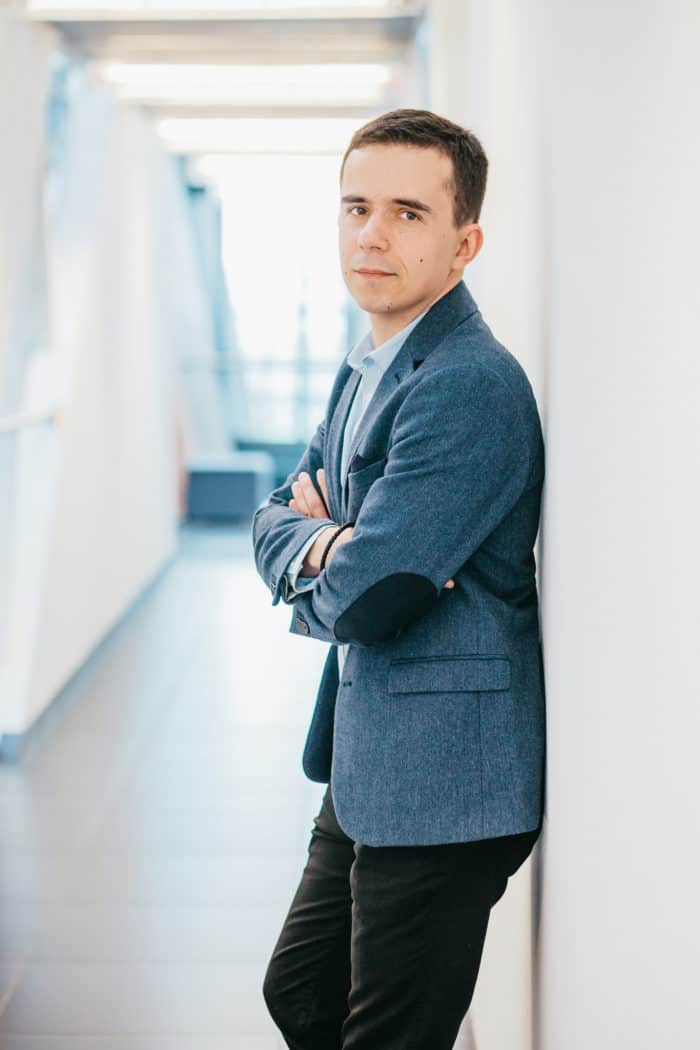
Bartosz Józefowski
Management board member of the KPT Seed Fund. From 2013 to 2017, he was responsible for the technology incubator and all startup activities at Kraków Technology Park. He now leads the KPT ScaleUp acceleration programme. He is deeply involved in Kraków's startup community and nationally as a Startup Poland ambassador. Fascinated by behavioural economics and new technologies, and a Beatles fan.